Their industrial success lies in their extraordinary chemical stability and their ability to repel both water and oils , making them very useful materials. However, these same properties mean that PFAS do not degrade in the environment and accumulate in living organisms, earning them the nickname "Forever Chemicals ."
Where are the PFAS located?
Their presence is ubiquitous. We can find them in:
- Consumer products : non-stick pans, food containers, cosmetics, cleaning products, carpets and stain-resistant textiles.
- Industrial uses : fire-fighting foams, semiconductor coatings, electroplating processes, plastic and rubber coatings.
- Food chain : fish, meat and vegetables contaminated through water or exposed soil.
- Drinking water : one of the main routes of human exposure, especially in areas near industrial sites.
Impact on human health
PFAS can enter the body through multiple routes, such as the consumption of contaminated water, contact with household or personal products, ingestion of contaminated food (fish, meat), etc.
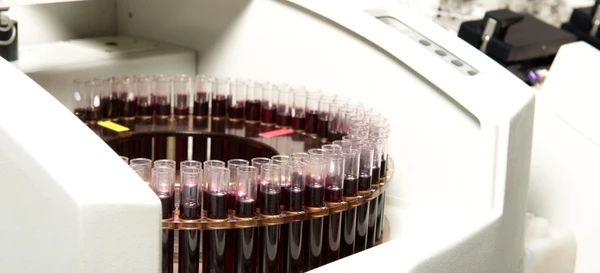
Once ingested, PFAS can remain in the body for years , multiplying their potential cumulative effect. In fact, many people worldwide have one or more specific PFAS in their blood, especially PFOA and PFOS.
Although research is ongoing, several studies suggest that certain PFAS (such as PFOA and PFOS) may be associated with cancer, hormonal imbalances, fertility problems, increased cholesterol, obesity, and immune dysfunction.
Analytical challenges: detection and quantification
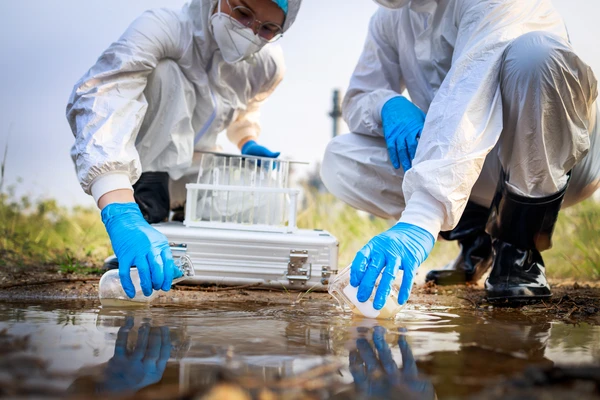
PFAS are found in the environment (water, emissions, soil) at extremely low concentrations, sometimes in the parts per trillion (ng/L) range . This necessitates highly sensitive and validated analytical methods , including:
- Liquid chromatography coupled to tandem mass spectrometry (LC-MS/MS) : currently the most widely used technique in control laboratories and regulatory agencies.
- High-resolution mass spectrometry (LC-QTOF) : essential for the identification of new PFAS and degradation products.
- Sampling in diverse matrices : water (groundwater, wastewater, drinking water), soil, air and biota.
Validation of methods by international bodies is key to ensuring that results are comparable and reproducible between laboratories.
Why is this a priority issue for laboratories?
PFAS present a challenge on three fronts:
- Analytical : require highly sensitive detection methodologies.
- Sanitary : These are persistent pollutants with possible adverse effects on humans.
- Regulatory : legislation is moving towards increasingly strict limits on drinking water and consumer products.
Therefore, laboratories play an essential role in the monitoring, control and development of new methodologies that allow us to anticipate risks and guarantee the safety of the population.
👉 In the coming years, regulatory and social pressure on PFAS is expected to increase, making it essential that analytical laboratories are equipped with robust and validated technology for monitoring these emerging contaminants.
Don't fall behind in the race against PFAS: contact us to learn about the most innovative solutions in PFAS detection and quantification.