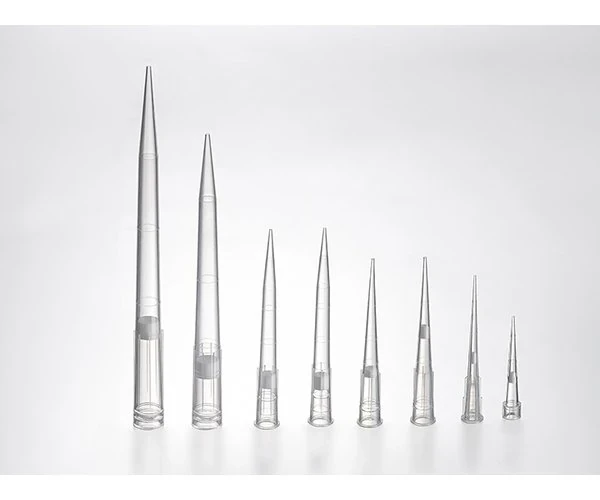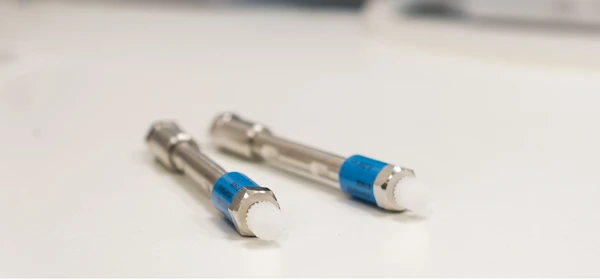
In HPLC, there are accessories that may seem secondary, but they play a key role in system stability and column lifespan. We are referring to inline filters, prefilters, and precolumns.
Why use them if they don't come with the equipment?
Although not always part of the standard system, these elements prevent many of the problems arising from the use of complex mobile phases or unclean samples . Their main function is to act as a barrier: they capture particles, debris, or contaminants before they reach the analytical column.
- Online filters
These filters can be installed upstream of the column, at the pump head outlet, or at the autosampler injection valve outlet. They protect the sample bed from unwanted particles. They do not replace sample filtration (which should always be done with 0.45 µm or 0.2 µm syringe filters), but they do provide a second line of defense that helps maintain stable pressure and extends the system's lifespan.
An important detail: the pore size of the inline filter must be smaller than that of the column's inlet frit. For example, if your column has 5 µm particles and its frit is 2 µm, the inline filter should have a pore size of 1 to 0.5 µm.
Do you notice the system pressure starting to rise? The in-line filter may be clogged. Check it and replace it if necessary.
- Pre-columns: a smart investment
They act as a "fuse" in the system: they are designed to retain compounds that could irreversibly adhere to the analytical column , protecting it from permanent contamination. Therefore, it is important that they have a stationary phase that is the same as, or very similar to, the main column.
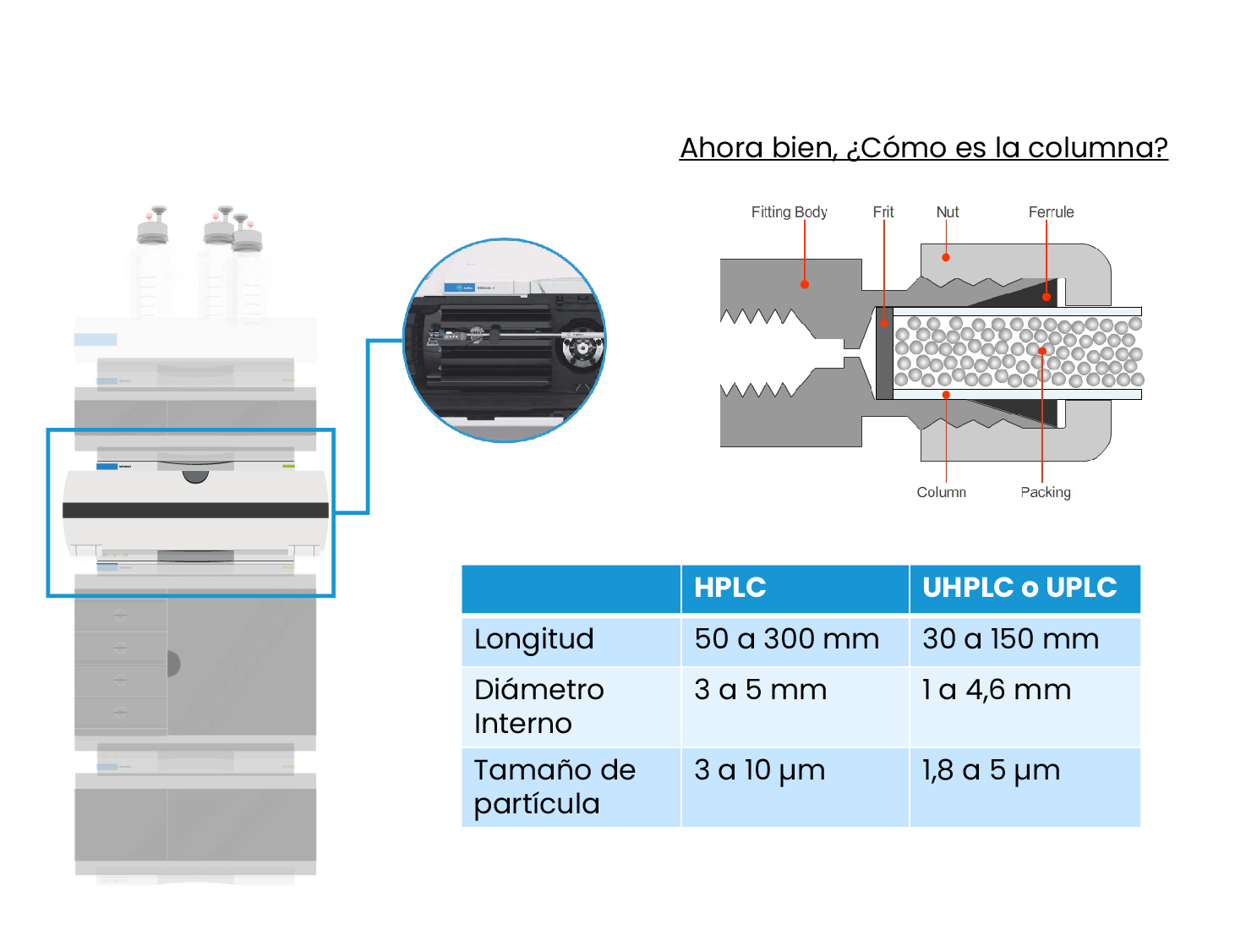
Their lifespan depends on many factors: the composition of the mobile phase, the injected volume, the purity of the samples, the pH… As they become contaminated or clogged, you will notice an increase in pressure and alterations in the peaks , such as broadening or splitting.